Runnin Down a Dream

I’ve taken a shot at global collaborations a few times and I guess I would call those attempts mildly successful.  I’m still searching for the one that will stick and feel like a complete success.  I really love the idea of students working on projects that defy the traditional brick and mortar confines of schools.

My first project started almost 7 years ago and in some forms still continues.

First visit to Ghana

You can read the full story from the link if you like, but the short version is my school in North Carolina connected with a school in Tema to provide them with a computer lab and hopefully create an exchange between students.  It was a long process. The first exchange was on paper and two years later there was a digital exchange.  Then the project stalled.  We’ll leave it at that for now.

This year I was contacted by a former colleague to do another letter exchange with her students who were English language learners in the mountains of North Carolina.  My advisory students somewhat willingly agreed to participate and we shared a few exchanges, but over the winter break, that too fell apart.

As I read through Kim Cofino’s Step-by-Step Guide to Global Collaborations I’ve realized that one of my flaws has been I’ve approached it more as a “this will be cool” kind of thing than “here’s what I want to accomplish”.  The Tema project developed with purpose after the initial phase, but it was a shaky start.

I would also venture to say that it is a little more difficult to convince middle school students in an international school that a global collaboration, mystery skype, etc. is a cool and advantageous exercise.  SkypeThey’ve lived all over and keep in touch with their friends in other countries via social media already.  Oh, and they’re middle schoolers.  There has to be more than just bells and whistles, they need to be interested.

I’ve had some success helping others at our school connect with projects. Our KG classes have connected with a school in Canada, first grade with a school in Finland and a few other connections that I’ve been able to help create thanks to Twitter, but I haven’t found the one for me yet.

I’m hoping that the unit that is the basis for my final project will eventually lead to a global collaboration.  This is our first year trying out the project and we want to keep it simple to start with, but in the future I see it as an opportunity to share the finished product, connect with other schools, and develop a broader collection of stories.

I feel like I’ve got the connected educator part down.  I’ve built the PLN, shared resources, gained resources and all of that.  Now I’ve got find the extension cord to my classroom.

A Change Would Do You Good

As I read Mark Pensky’s article Shaping Tech for the Classroom, I nodded along in agreement.  Change is needed and not just doing old things in new ways.  We need to do new things in new ways.  That’s what education should be about learning how things have been done and looking for new and better ways to do them.  Pushing our students and our schools to be innovators, be at the edge of the future instead of balancing somewhere precariously between the past and the present.

Then I realized that the article was written in 2005. eye poppingTen years have passed and many of the same issues and ideas are still being discussed.  Why?  Even the MacArthur foundation report discussing the ways teens use and learn through technology is now seven years old. That means the subjects of the  study and the students of the classrooms discussed in Pensky’s article are very likely college students or even professionals by this time.  Hypothetically some of them are even teachers.

Why then, if we have been talking about technology in education for the past ten years, actually since the days of Mr. Jefferson, Thomas not George, have we still got classrooms with chalkboards and teachers using SMARTBoards as over priced projectors?  Shouldn’t today’s new teachers be tech savy and masters of integrating technology in the classrooms.  Yet it seems that statistics show that, in the United States, we aren’t quite there yet and the public believes we have a long way to go.LEAD Poll Results

It is hard to understand why we continue to have these conversations and the call for change is being trumpeted throughout education, yet it only seems to bounce of the walls of policy and funding and leave the teachers in the lurch.

The positive side of it comes from the expanding, or maybe shrinking, world of teacher’s taking the reigns for their own professional development.  It is evident everyday on Twitter that the agents of change are knocking down walls and entering into global collaborations to instill change in our profession. On chats like #NT2t, #BFC530, #INZpirED, #whatisschool and, shameless plug, #AfricaEd along with countless others, they’re encouraging one another, sharing ideas and experiences and gathering data to help implement new ideas and programs in their own schools.  Its a source of inspiration and hope.

The pundits and the thinkers and politicians will continue to talk about it and tell us how it should happen.  But its on the ground where changes occur, and I truly think it is coming.  The proof is in the conversations from the real experts.


//

Image Credit: Villani, Joshua. Eye Popping Cartoons. Digital image. Deviant Art. N.p., 2010. Web. 1 Mar. 2015.


Funny the Way it Is

because, “you know how in school you’re creative, but you’re doing it for a grade so it doesn’t really count?” -from Living With New Media

Of everything I read, watched or listened to this week, this quote is what struck me the most. 

Are we ruining creativity by assigning it?

What is it about school that makes a creative kid feel as if school has sucked the creativity out of her chosen form of creative expression?  That’s rough.

It makes me think about Clark.  The high school kid that walked campus alone and sat in the corner of my humanities class with out speaking for the first few weeks of school.   But then, stood up in front of the class and gave a dynamic presentation about his favorite video game.   By the end of his presentation he had the whole class laughing and asking questions about a game that five minutes ago they cared/knew nothing about. 

Clearly messing around and playing this game was more than just a passing phase for Clark.  He put thought and creativity into strategies and resources that were needed to win. He had an entire cohort of people he collaborated with online.  Yet, the essential reasons the game was so important to him was the connection he was able to maintain with his friends in the States.

After that presentation, he was a little more vocal in class, but he never showed that kind of interest again.  Work was turned in late and he just kind of floated through the class. The creativity was definitely in there, he just felt no reason to bring it out for World Wars or politics on the global levels.

It certainly warrants a look at what it is we are doing for and to our students. It makes me wonder why more schools aren’t experimenting like this. It is hard to develop creativity in an environment that fosters compliance.  Yet the first ISTE Standard for Students is creativity and innovation.  I’d go along with the argument that there need to be some major changes in our approaches to education if we really want to see worthwhile creativity from our students. That is creativity that isn’t practiced or developed just for a grade.

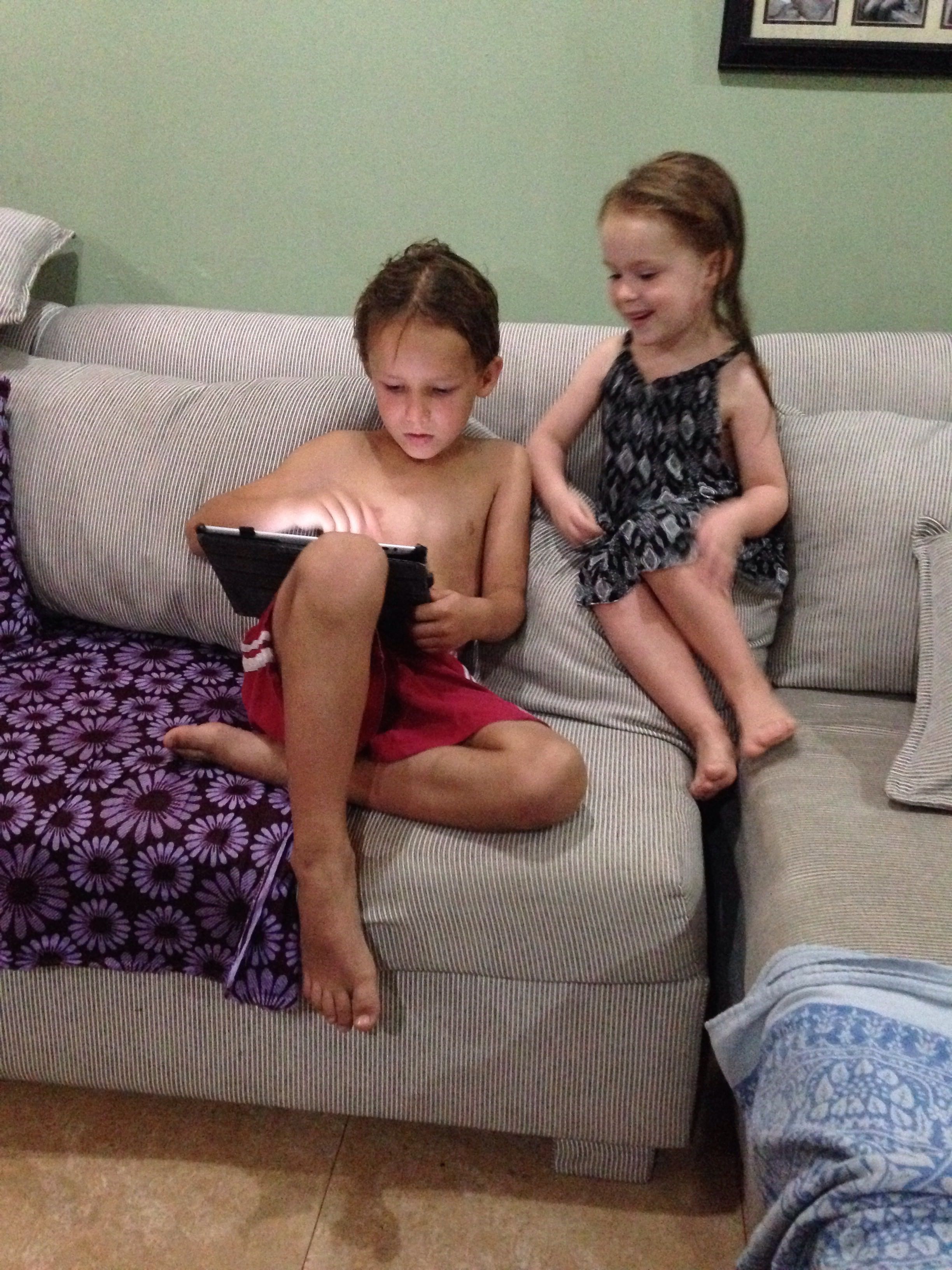
My little ones learning to code together on an iPad

If students are spending their time at home developing, creating and innovating with technology and we are constantly trying to predict the next big thing and keep up with them by bringing those same tools and platforms into the classroom, are we encouraging their creativity or ruining it?

Image credit http://www.upsidelearning.com/blog/index.php/2011/09/23/sir-ken-robinson-on-schools-killing-creativity/ (ironically enough a Testing eLearning company’s site)

With a Little Help From My Friends

While I understand the importance of understanding how we learn, if I’m honest, I tend to drift a bit when it comes to reading about learning theories.  I start to understand how my middle school students from across the globe feel as they read about a bunch of white guys in knickers and wigs deciding they are tired of paying taxes to a bunch of other guys in fancier knickers and wigs.  Granted, my students are probably facing a few more distractions, but you get the idea.

But then, while I’m listening to some tunes, messing around on the internet and browsing, mostly educational, articles in between working on a proposal for professional development at my school, things start to click.

I re-read what George Seimens says in Connectivisim: A learning theory for the digital age: “Since we cannot experience everything, other people’s experiences, and hence other people, become the surrogate for knowledge.” I realized that my proposal for edCamp style professional development is based on something I’ve never actually experienced myself.  However, I’m quite keen on trying it out at our school and believe that it would be a breath of fresh air for our school’s staff development program.

edcamp Ghana
Hopefully coming soon…

So how do I go about building my knowledge?

Well, I’ve previously Skyped with one of the founding members of edCamp, when I first had the idea months ago, who offered all kinds of great advice and resources. There’s also a previous connection made (via Twitter) with one of the organizers of edCamp Denver who shared the entire planning process for their large scale event via Google Docs. So I’ve got some prior knowledge built from primary sources.

My next stop is Twitter again where I ask my PLN for info on their experiences.

A little help from my friends

Within an hour I’ve got three blogs to read and four other people saying they’ll put me in touch with the people who planned similar sessions at their schools.  Pretty soon emails are rolling in from colleagues of my Twitter contacts and I’ve got a ton of information to work through and create a proposal.

In the course of a day I realize I’ve exemplified most of the significant trends in learning outlined by Siemens and hopefully put together a pretty good proposal constructed almost entirely with other people’s knowledge and experiences.  I just had to take that information, make sense of it and apply it to the situation I was facing.

Now some of that lofty lingo from the deep thinkers about thinking is starting to make sense.  I’m still not certain I have a perfect grasp on the connectivism theory, but by being connected, I’m slowly figuring it out.  I never knew that messing around could be so productive.

Thanks guys.


The Long Strange Trip to my PLN

I’ve always thought of myself as a tech guy when it comes to the classroom.  I’ve been the guy other teachers looked to for everything from trouble shooting VCRs in the beginning to introducing Google Hangouts.  But I was doing a lot of work on my own searching for resources and learning through trial and error.  I was a long way from being a connected educator and, as Jeff Utecht suggests in Reach, figuring out how to get the resources to come to me.

It took a somewhat random series of events for me to actually understand the power of a PLN and begin to establish my own.  Let me take you back a couple of years…

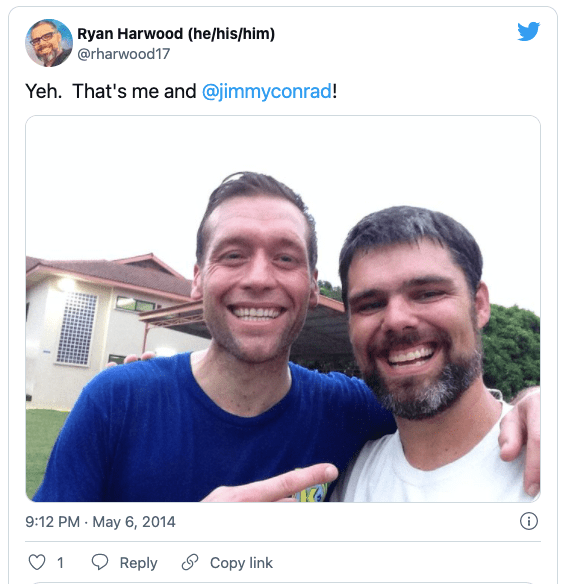
In the beginning I used Twitter to read about sports, news and music.  I was mostly just a lurker. Then I got some replies from a couple of famousish people and started thinking there was some power behind it all.  And then, last year this happened

Screen Shot 2022-01-22 at 2.12.55 PM

(That’s Jimmy Conrad from the USMNT. He came and played in our staff pick up game)

That’s when I realised the power of connectivity and the limitless boundaries of the tool.  I talked a former member of the US World Cup squad into visiting my school.  Maybe there’s some potential here professionally as well.

I then increased my lurking (which is common enough that there is at least some data) to include a few educator chats like #satchat but still rarely chimed in on the conversations.  I just wasn’t sure what to say.  Then I stumbled onto #BFC530 one day during my planning and it took off from there.  It was more than a chat, it was a true community. I was greeted and welcomed each day.  All of a sudden I felt like I had not just a new set of resources, but a new set of friends. The resources that were being shared blew me away.  I mentioned wanting to try out an edCamp here in Ghana and I instantly had access to the entire catalog of planning documents for edCamp Denver.  I was becoming a part of a bigger picture that included teachers and students who already knew the power behind the internet and connected communities.

I enjoyed the sense of being connected and had found a group of like-minded educators to bounce ideas off of and share resources.   Now I wanted to connect with teachers who were working under similar conditions, in similar schools on the same continent.  So I did a little research, asked a couple of related-to-friends-through-Twitter connections, found a little support and became a truly active member of my PLN by starting my own Twitter Chat.

#AfricaEd Header 3#AfricaEd has a small group of educators from international schools across Africa that discuss educational topics every Tuesday and Thursday.  Its been a fantastic, challenging, growth experience.

Value Added

Reflection has been the learner profile trait of the last couple of weeks here at LCS so I thought it fitting that I take a few moments to look back at the first two months of #AfricaEd and what I’ve learned.  So here’s my list, in no particular order.

Developing and maintaining a Twitter chat is a lot of work.  I have to admit, I really had no idea what I was getting into when I started this.  I had participated in a few chats and was amazed by the value of the conversations and the development as a professional that they offered me.  I saw the potential in a chat that connected educators in Africa and I simply went for it.  I researched an available hashtag, threw together a quick website and started promoting the chat on Twitter and through Facebook groups.  For some reason I thought getting it started would be the hard part and then it would cruise along by itself.  Its so much more than that though.

The process has stretched me as a professional as I’ve worked to establish a community of educators, continued to find ways to promote the chat and looked for intriguing and productive topics. It has been a fantastic two months of growth for me.  I’ve connected with educators from around the world, learned new skills and implemented several new ideas in my classroom thanks to the development of the chat. It something that couldn’t be done on my own and I’m thankful to the entire community of educators that have suggested topics, moderated chats and simply been supportive as we’ve gotten this started.

Opportunities presented by a global PLN are endless and go well beyond my own benefit

Since going full force into the world of Twitter, I’ve not only grown on my own, but I’ve managed to be a help others as well. For me, that’s an even better feeling.

Jessica Raleigh (@TyrnaD) of Colorado presented to our secondary school faculty here at Lincoln Community School via Google Hangouts about the potential and uses of Google Hangouts in education.

Our KG class just yesterday participated in a Skype conversation with a class in Canada where they discussed holiday traditions and shared seasonal songs with each other.  Our students here even got a glimpse of snow thanks to the magic of Skype and they’ve got plans to continue the conversation in the next semester.

My own grade 8 students created videos about Christmas in Ghana and their home countries to exchange with connections made in Ethiopia and Canada.

The counseling department here at LCS is working to create a chat for international school counselors in the coming semester. (Full disclosure, that department includes my wife.)

There have also been several times when retweets have helped to connect colleagues and I’ve been able to sit back and watch a beautiful conversations develop.

Then there are the innumerable resources that have been selflessly shared with me and I’ve passed on to colleagues.  What if the whole of education worked this way…

There are a lot of positive, progressive teachers out there

Every morning there are an amazing amount of teachers in the States dragging themselves out of bed at 5:30 am (EST & MST) to participate in the conversation on #BFC530. In fact, there are also people on the other side of the world staying up late to join in as well.  Its an amazing dose of positivity and inspiration that thanks to time differences comes to me around my second cup of coffee.  It was that positivity and sense of community that inspired me to take the leap and create #AfricaEd.  I still love to jump in with #BFC530 anytime I can as my class schedule allows.  Its a constant source information and hope.

Our own conversations on #AfricaEd have the same sense of positivity and have sparked some fascinating discussions.  I’ve got a reading list a mile long and so many ideas to pursue I had to get a notebook to start a short and long term to do list.  The community of educators on Twitter here in Africa seems to be a bit smaller, but the schools they represent are pushing the envelope of progress and creating amazing experiences for their students.

Then there are the plethora of other education chats that have the provide endless amounts of inspiration and resources.  Just to plug a few I’ve come across:  #aussieEd #NT2t #asiaEd #INZpirED #satchat #geniushour It can be hard to choose where and when to participate there are so many excellent conversations out there.

I’m thankful for the opportunity that developing this chat has presented me and I look forward to the challenge of keeping it productive and relevant.  I could ramble on about the power of these chats and the experiences I’ve gained over the past two months and there are probably those here at my school who feel like I do.  I’m ok with that though.  I feel strongly that this is a major part of the future of education.  Global collaboration and sharing of resources has the potential for exponential growth of our profession and in turn of our students.  I don’t think I’ve ever been as excited to be a teacher and to see what the coming year will bring.

Lessons from two weeks of chats

I’m excited about the network that is building here at #AfricaEd. We may not have overwhelming numbers of people in our chats right now, but I feel like there is a definite quality in the discussions.  I think an important part of continuing this for the long term will be building that sense of quality and community.

I’m happy to have a small, core group of contributors if it means we have quality conversations that allow us all to grow and learn.  This isn’t to say that I’m not looking for the chat to grow and include more people.  Quite the opposite.  I hope we continue to grow and those involved will share the experience with their colleagues.  I also hope that along the way we will get more than just the international school’s perspective of education here in Africa.  But ultimately, I think the quality of discussion and learning is much more important than quantity of participants.  So I’ll continue to look for ways to get more educators involved in our chats, but I also want to focus on keeping those who helped us get started.

Finally, I continue to be amazed by the unselfishness that seems to exist within the world educators utilizing Twitter.  I’ve seen so many people over the past several weeks and across several different chats, handover incredible amounts of resources.  Not just a worksheet or two, but months worth of planning documents and implementation tools.  This is what education and professional development should be about.  This is how we develop innovation and creativity in our schools.  By selflessly sharing the things that work.  Because they work and because, in the end, it really is about the students.

Akwaaba

In Ghana, Akwaaba means welcome.  I’m more than happy to extend the greeting to all that have been a part of this fantastic first week of #AfricaEd.

Tuesday marked the first edition of #AfricaEd. I honestly had no idea what to expect and was prepared to watch my Twitter feed stare back at me blankly throughout the day. However, I was pleasantly surprised. Thanks in large part to my friends at #BFC530 who threw their support behind me with a simulchat to help launch and the support of the Association of International Schools in Africa  who published an article promoting our chat, as well as all who participated, I think I can call it a success.

We had two chats this week and each produced some good conversations. Connections and ideas have been created and shared along with a few laughs. One of the fantastic aspects was not only the global connections, but the ones that were made within my own campus at Lincoln Community School.  Funny how it works that way sometimes.

Now comes the work to see if we can continue to create a true community of educators.  I hope that as the chat continues we will not only grow our community of international schools and educators but also find ways to gain perspective from local teachers and education leaders in our communities. I think that’s where the conversation could get really interesting.

So thanks to all of you who participated, looked in, browsed the site, thought about it and supported it.  I look forward to making more connections in the weeks, months and years to come.

Akwaaba.

Below is a map created from a quick scan of participants in this week’s chat.

Welcome to #AfricaEd

Welcome to #AfricaEd a Twitter chat focused to those working on the African Continent.  Whether you are an international educator or working in a local school, I hope that you will join this new PLN to learn, share and borrow ideas from educators across Africa and the world.

#AfricaEd will be a slow chat.  Starting out, we’ll have chats just twice a week on Tuesday and Thursday.  Questions will be posted at 7:00 am GMT on each day.  Respond any time and as much as you please throughout the day and follow #AfricaEd to enjoy the conversation.  You might not get an immediate reply, but you should get one eventually.  We cross a few time zones, so we’ll see what happens.

This is about building a community of educators.  Be active to get the most out of it.  Join the conversation, suggest a topic, even moderate for a day.  But if you’re new to Twitter or chats, feel free to just follow along until you’re comfortable.  Just know that we definitely want to hear from you.

Tips for being a part of the conversation.

  • Always remember to add #AfricaEd to your tweets (I like to copy and paste, its quicker)
  • Reply directly to others for 1:1 conversations
  • Retweet and Favorite good ideas to share and save for later
  • tag others in the conversation by using their Twitter handle
  • join in
  • and as my kids constantly remind me “sharing is caring

If you are interested in helping coordinate and organize please let me know.

Thanks to @j_iglar, @TyrnaD & @ScottCapro and all the #BFC530 crew for the inspiration to get this started.

Connected

It took close to four years to get it completed, but just before my family headed to the states for Winter Break I got the email below.  It just might have been the best Christmas present ever.
We’re now working on the next steps of actually getting our schools communicating with one another.
___________________________________________________
Hello Ryan,
    I hope you are doing great. Vodafone has finally connected the internet. Thanks so much for all your support. Happy Xmas.
Regards.
Seidu Habeeb (CEO)
P.O.Box 13375
Accra Central
Tel: 0266473706 / 0233473706
itfgh7